
House Washing & Siding Cleaning
in Chicago’s North Shore
Prices are published below and start at $195.
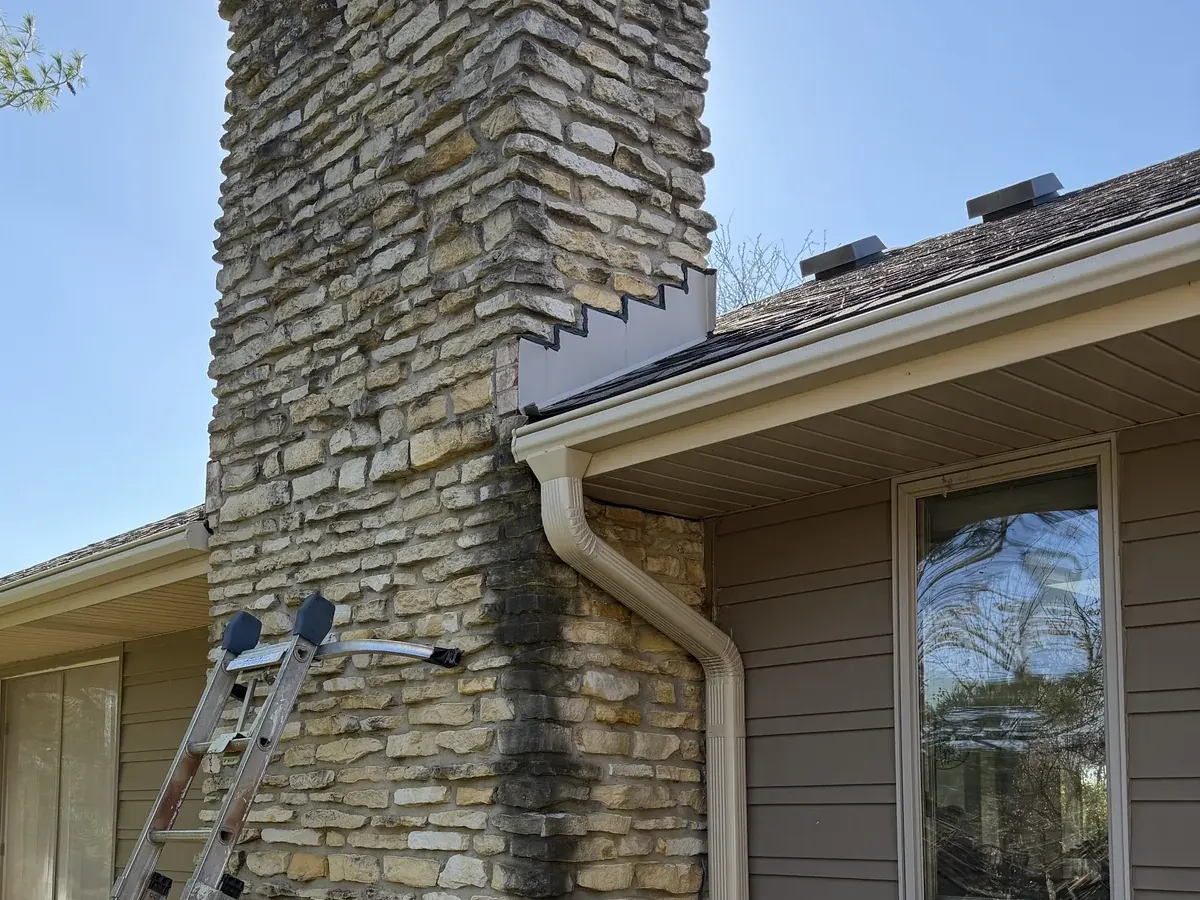
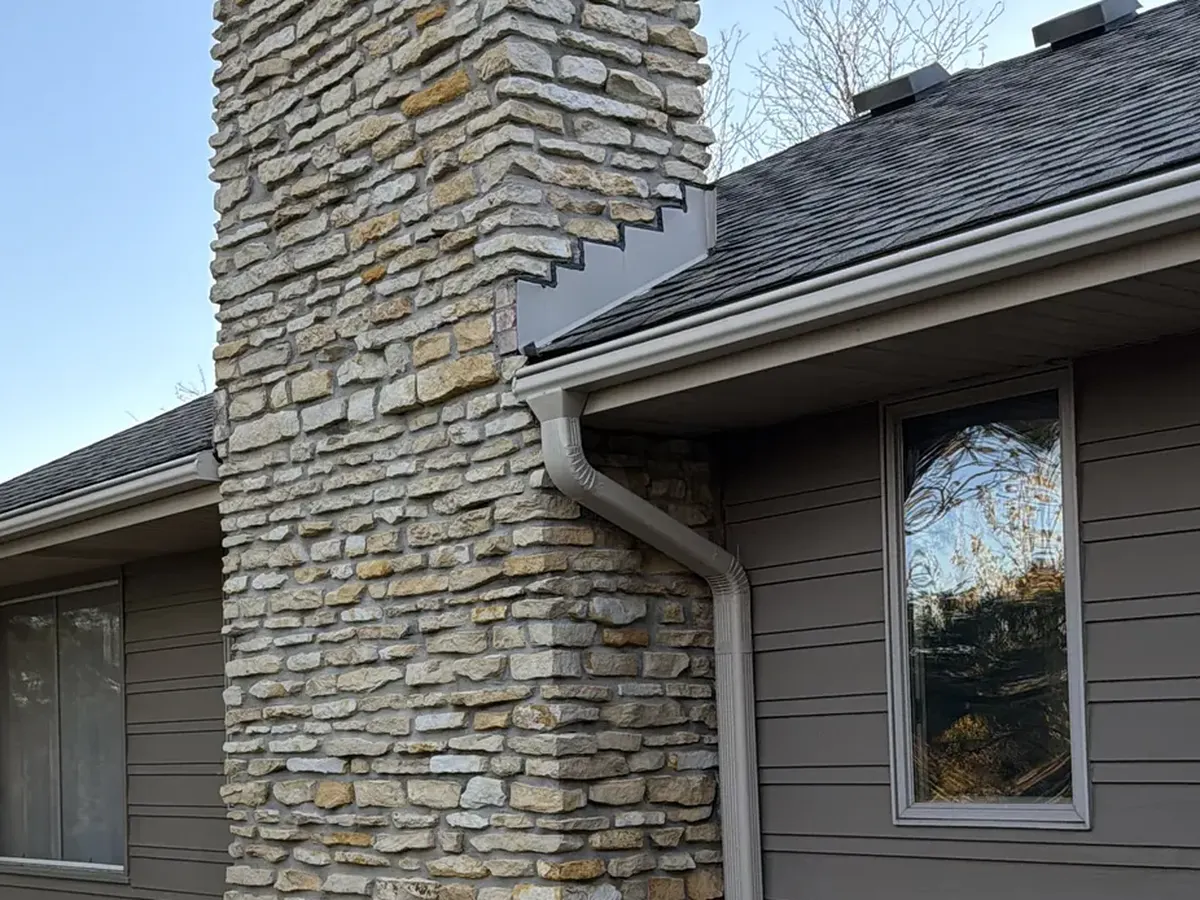
The green and black on the north side of your house is algae and mildew growing in the siding. We remove it with a cleaning solution and low pressure, the way siding is supposed to be cleaned. We do not pressure wash houses. We soft wash them.
Price Your House Wash
Pick your house and see the number. No email address, no phone number, no waiting for a callback.
This is the price you pay. We confirm it in writing before we schedule.
A person answers within minutes during business hours. Same-day service is often available.
Book Online Email me this priceHouse Washing Prices
Priced by how many stories the house is and how many sides you want cleaned. Most people do all four. Some only do the two sides that face north and east, because that is where the growth is.
| House | 1 side | 2 sides | 3 sides | All four sides |
|---|---|---|---|---|
| One story | $195 | $225 | $270 | $340 |
| Two story | $205 | $285 | $395 | $510 |
| Three story | $285 | $385 | $520 | $680 |
The table above is for homes up to 2,500 square feet. $195 is our minimum visit. A raised ranch is priced as a one-story. A split level is priced as a two-story.
Larger Homes
Rather than quote every large home by hand, we publish the steps.
| Home size | Price | Two story, all four sides |
|---|---|---|
| Up to 2,500 sq ft | Table price above | $510 |
| 2,500 to 3,500 sq ft | Add 25% | $640 |
| 3,500 to 5,000 sq ft | Add 50% | $765 |
| 5,000 to 6,500 sq ft | Add 80% | $920 |
| Over 6,500 sq ft | Quoted on site, usually the same day you call | |
We go by finished above-grade square footage, the number on your listing or your assessor record.
Detached Garage
| Garage | 1 side | 2 sides | 3 sides | All four sides |
|---|---|---|---|---|
| Detached garage | $55 | $90 | $135 | $190 |
Priced as an add-on to a house wash on the same visit. On its own it is a separate trip and the $195 minimum applies.
Included in Every House Wash, at No Extra Charge
- All siding, soffits and fascia on the sides you are having done
- The outside faces of your gutters and downspouts, washed with the same solution as the siding
- Garage doors, shutters, trim and exterior light fixtures
- Spider webs, egg sacs and abandoned wasp, hornet and mud dauber nests removed from the siding, soffits, eaves and light fixtures
- Plants and beds pre-wet before we start and rinsed again when we finish
You never pay more than the written estimate. The price we give you before we start is the price you pay. If the scope changes, we stop and call you first.
Bundles
The truck, the crew and the drive out to you cost the same whether we do one service or three. When you stack them into one visit, that saving is yours.
House and roof together: $150 off the roof wash. This is the one worth taking. The black streaking on your roof is the same organism growing on your siding, feeding on the limestone filler in the shingles, and it is treated with the same solution by the same crew on the same visit.
Roof washing is quoted separately because pitch, height, access and shingle condition all matter. Ask for it with your house wash and $150 comes off. See roof washing
Windows or gutters: $50 off. Take $50 off when window cleaning or gutter cleaning is booked on the same visit. Windows go after the house wash, never before.
Discounts stack. A house wash with the roof and the windows on the same visit takes both, for $200 off the combined price. Discounts come off after the size band is applied.
We do not pressure wash houses. We soft wash them.
This is the part most companies skip, and it is the part that decides whether your siding still looks good in two years.
A pressure washer cleans by force. It strips the dirty layer off the surface using water moving fast enough to hurt you. On a driveway that is fine. Concrete does not care. On the side of a house it is the wrong tool, and it causes four problems that show up later. See pressure washing for driveways and patios
What high pressure does to a house
Drives water up under the lap joints and behind the siding, where it sits against the sheathing. Removes the visible growth and leaves the roots, so the stains come back the following season.
What a soft wash does instead
Applies a cleaning solution at roughly the pressure of a garden hose. Kills the algae, mildew and mold at the root rather than knocking the top off. Leaves seals, caulking, paint and window frames alone.
What is actually in the solution
A diluted sodium hypochlorite cleaner, which is the same active ingredient as household bleach and is what kills the organism. A surfactant, which is a soap that makes the solution cling to a vertical wall instead of running straight to the ground. And water, which is most of the mix.
The surfactant is the part that matters and the part cheaper operators leave out. Cleaning solution needs contact time to work. If it slides off the wall in four seconds it has not done anything, and the only way to get the house clean at that point is to turn the pressure up. That is how houses get damaged.
We apply the solution, let it dwell while it works, and rinse at low pressure. The dirt and the dead growth come off in the rinse. The wall is not being scoured, it is being cleaned.
| Surface | Right method | Why |
|---|---|---|
| Vinyl siding | Soft wash | Panels are hung loose by design. High pressure pushes water behind them. |
| Aluminum siding | Soft wash | Oxidizes and chalks. Pressure lifts the finish and leaves streaks. |
| Fiber cement, including Hardie | Soft wash | Factory finish is thin. Pressure dulls it and exposes the board. |
| Cedar shake and painted wood | Soft wash, reduced strength | Wood takes on water and paint lifts. Pressure raises the grain permanently. |
| Stucco, EIFS and Dryvit | Soft wash | Pressure blows holes in it. Repairs cost more than the wash did. |
| Aluminum and metal awnings | Soft wash | Same surface and same chemistry as the siding. Washed with the wall. |
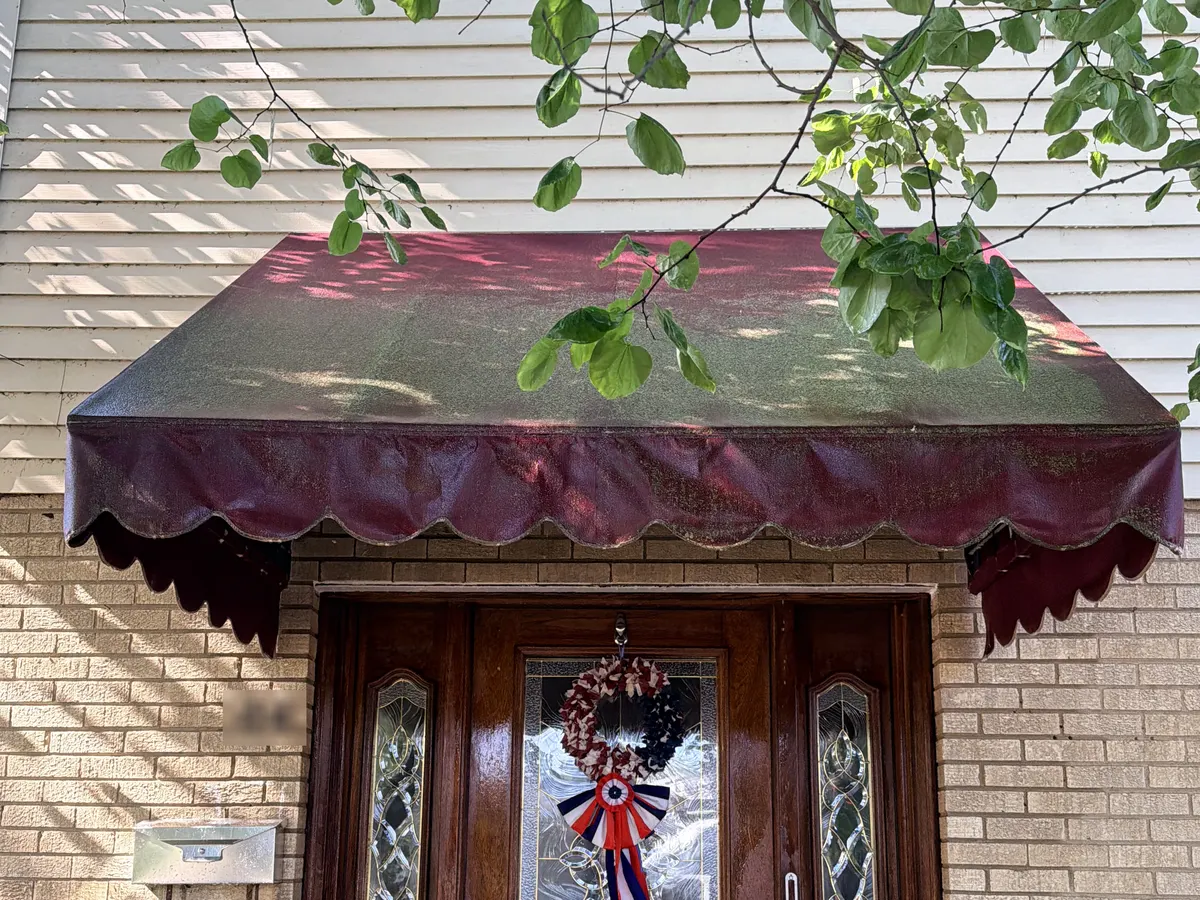
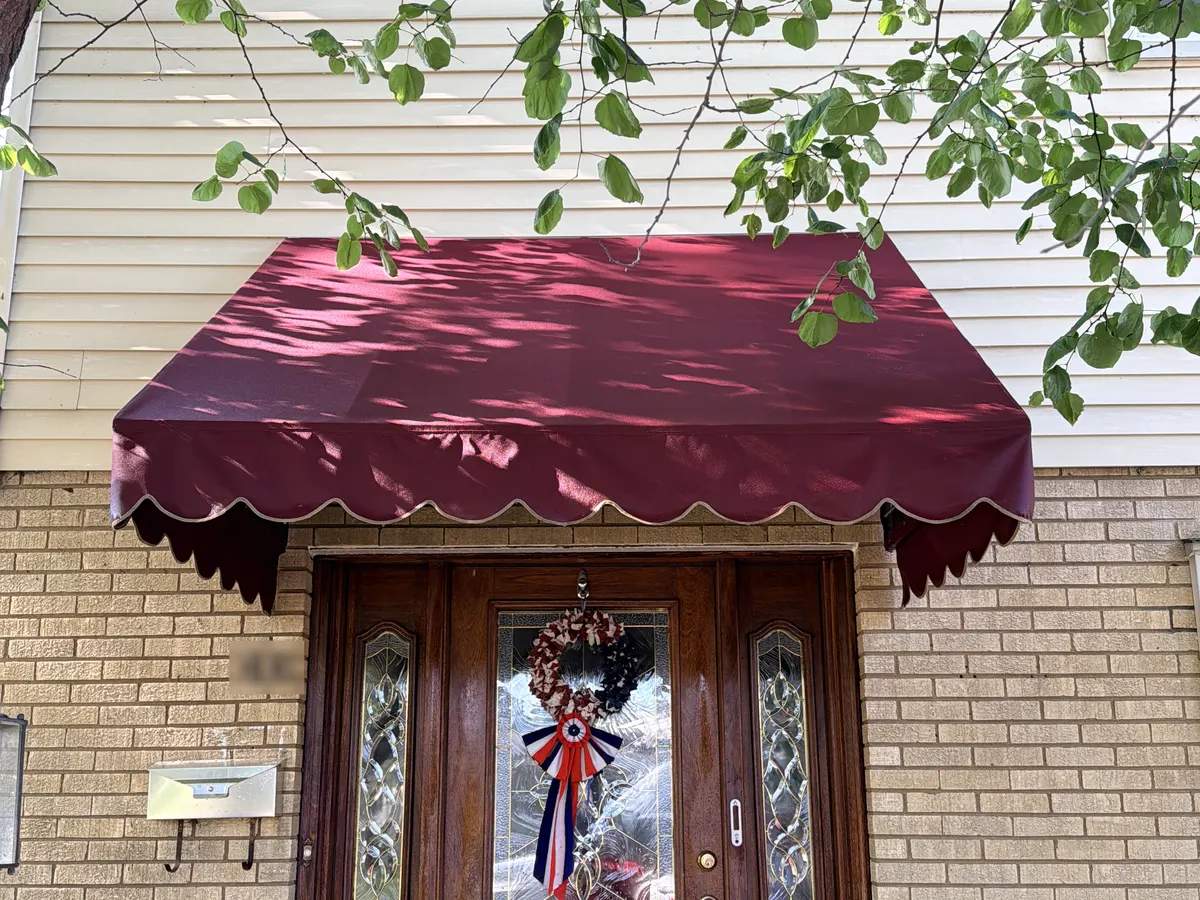
| Fabric and canvas awnings | Soft wash, awning product | House wash mix will lighten some fabrics and weaken stitching. Different product, priced separately. |
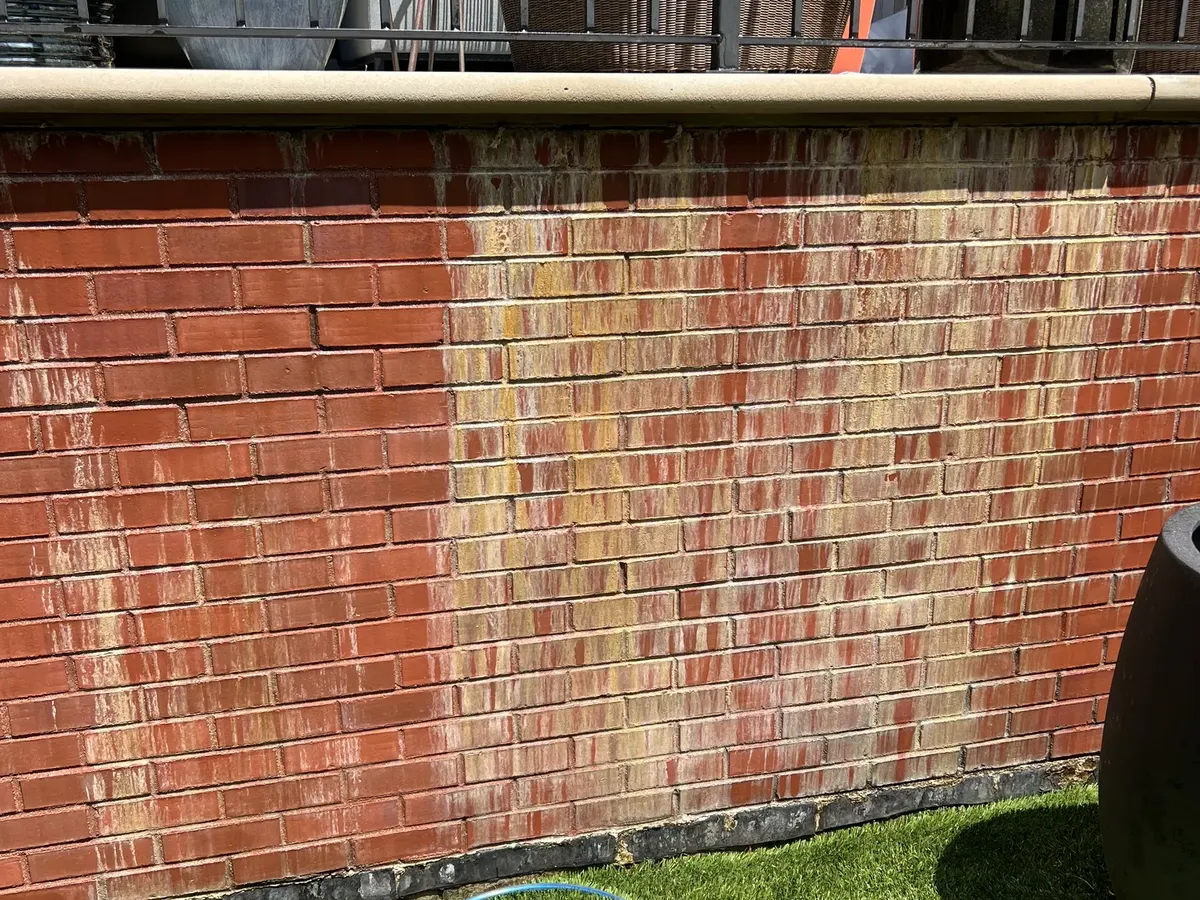
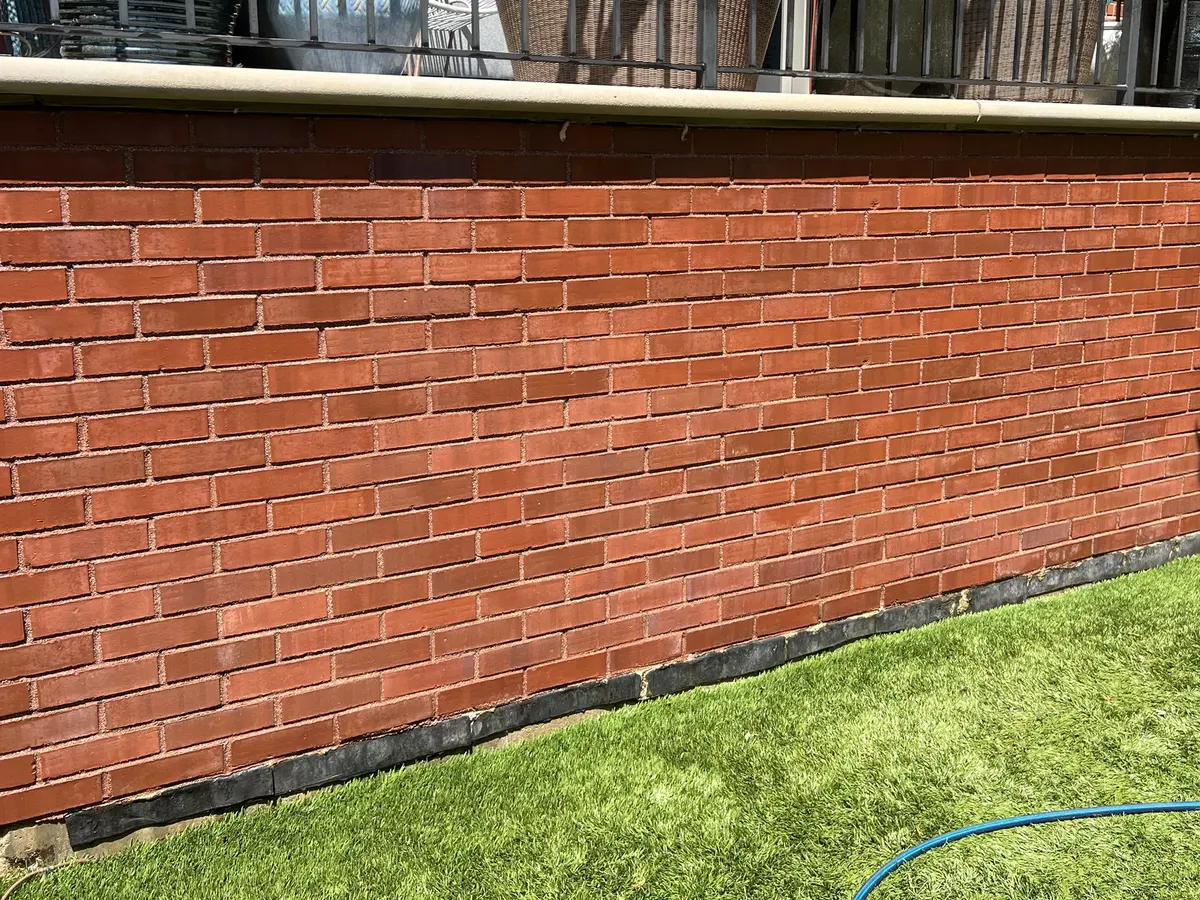
| Brick and stone | Soft wash for growth, pressure for salt and grime | Depends on mortar condition. We look before we decide. |
| Driveways, patios, decks, fences | Pressure wash | Hard surfaces, no cavity behind them. See our power washing page. |
| Roofs | Soft wash only, never pressure | Pressure removes granules and ends the roof. See our roof washing page. |
If a company offers to pressure wash your siding, that is not a price difference. It is a different job with a different outcome.
What a House Wash Will Not Remove
A soft wash removes what is growing on your house and what has settled on it. Three things do not, and we would rather tell you now than have you standing in the driveway afterwards wondering why.
Black stripes on gutters
The gutter’s painted finish has oxidized and grime has bonded into it. A house wash does not move it. It needs a gutter brightener worked in by hand, section by section.Gutter brightening, from $1.75 per linear foot, $150 minimum
Rust and irrigation stains
Orange staining low on the siding is iron, usually from sprinkler heads throwing well water at the wall, or from a rusting fastener or railing bleeding down. Chlorine-based cleaner does nothing to iron. It takes an oxalic acid treatment.Rust and irrigation stain removal, from $95
Hard water scale
The white, chalky ring under a sprinkler line or on windows and stone is mineral deposit that has etched into the surface. Same fix as rust, and on glass it may be permanent depending on how long it has sat.Hard water and mineral removal, from $95
Awnings
Aluminum and metal awnings, door hoods and canopies are the same surface as your siding and get washed with the wall at no extra charge. Fabric is a different job.
The solution that strips algae off vinyl is too aggressive for most awning fabric. At house wash strength it will lighten some canvas and vinyl-laminate awnings, and over repeated exposure it weakens the polyester thread holding the seams together, which is how a perfectly good awning ends up splitting along a stitch line two summers later.
Cleaning any awning also strips the factory water repellent, which is what makes rain bead and roll off rather than soak in.
Retractable Awnings
If you roll a damp awning back into its cassette, you have built a dark humid tube for mildew to grow in, and the next time you extend it the underside will be spotted worse than before we started. After we clean it, leave it extended through at least one full dry sunny day.
We also do not clean an awning we think will not survive it. If the fabric has gone brittle, the coating is flaking, or the stitching is already opening, washing it can finish the job. The crew will tell you that before they start rather than after.
Fabric awning cleaning
from $75 per window awning, from $175 per patio or retractable awning
Reduced-strength awning product, hand-agitated on both faces, rinsed thoroughly.
Awning water repellent re-treatment
from $60 per awning
Cleaning strips the factory water repellent. Re-treating restores it.
See the Difference
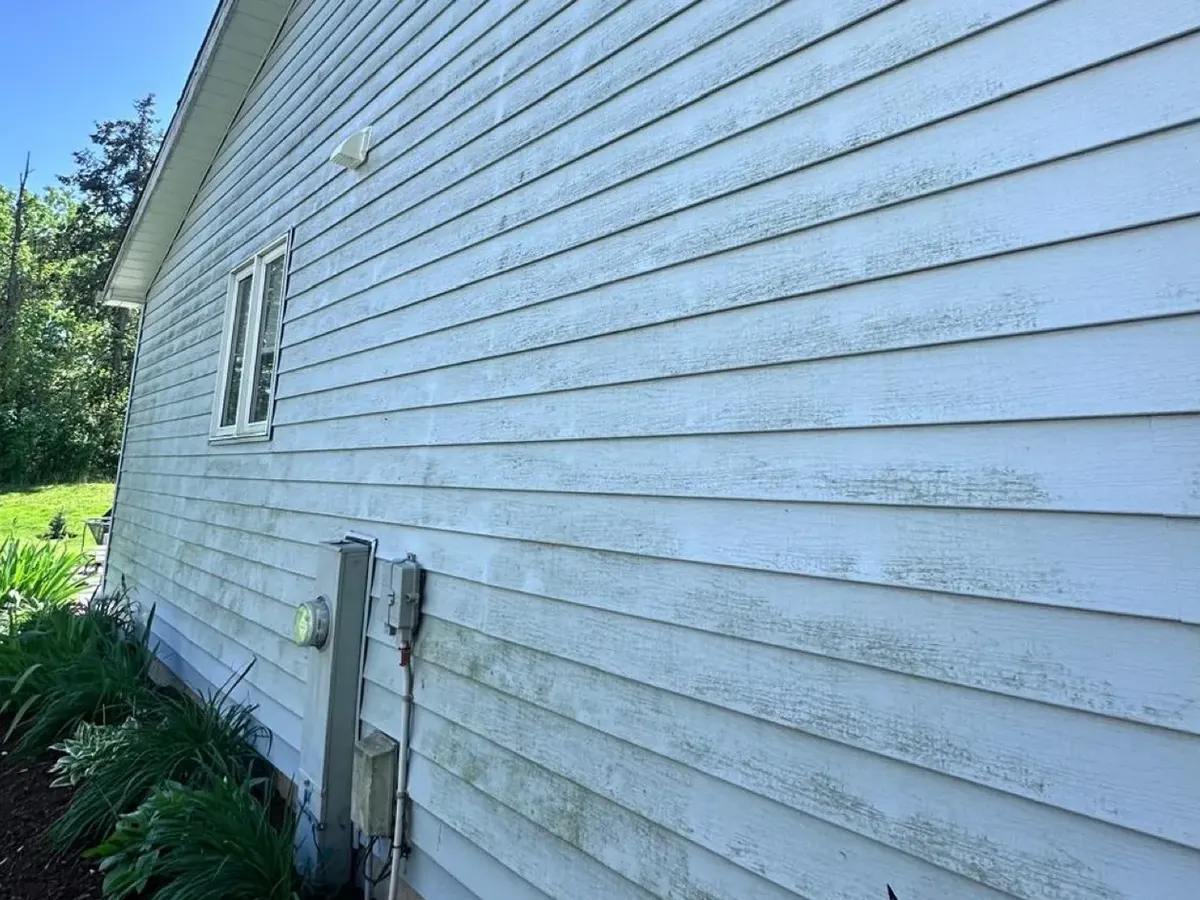
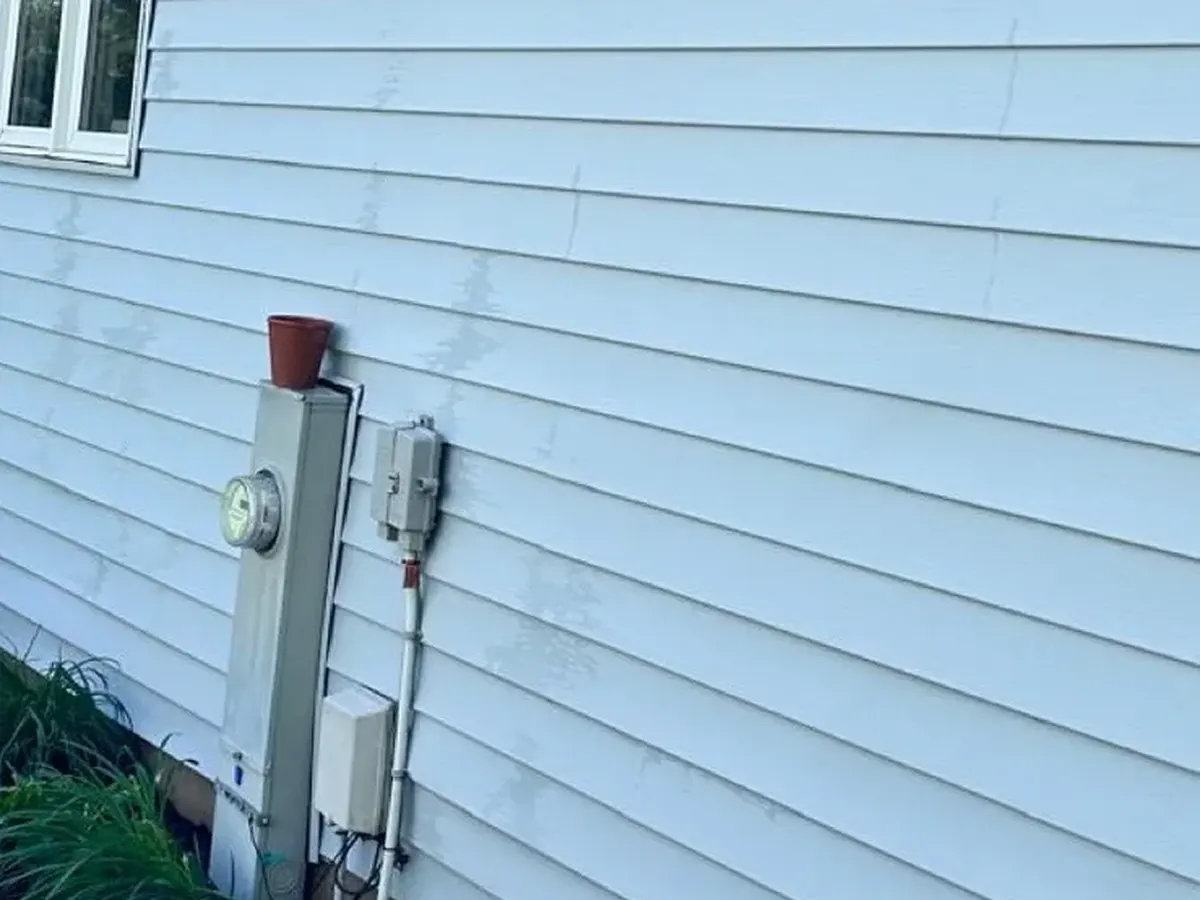
Drag each slider to compare.
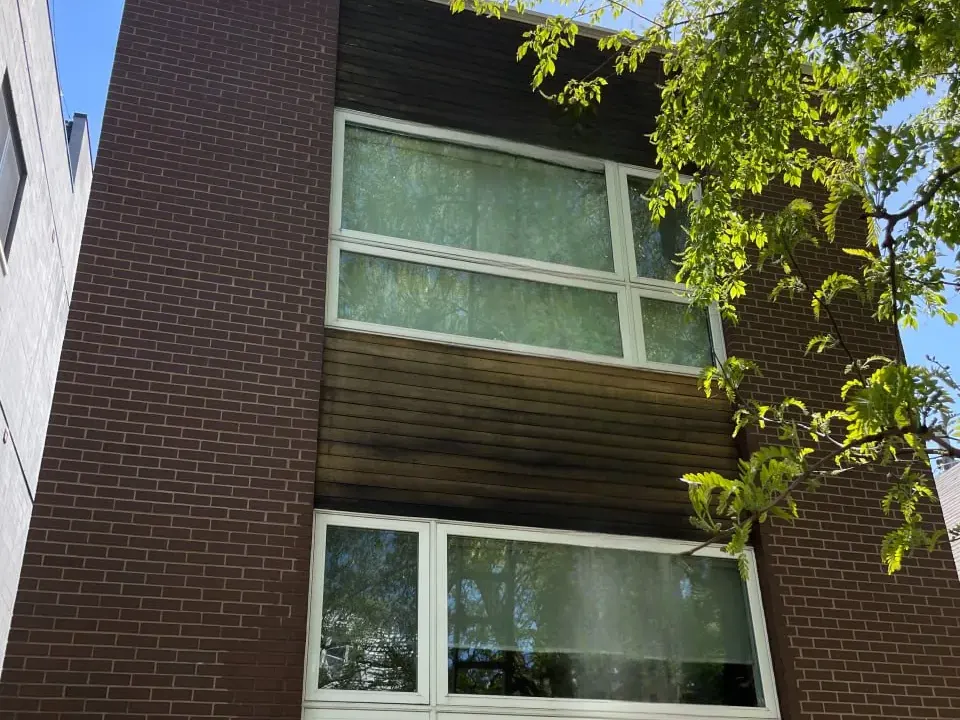
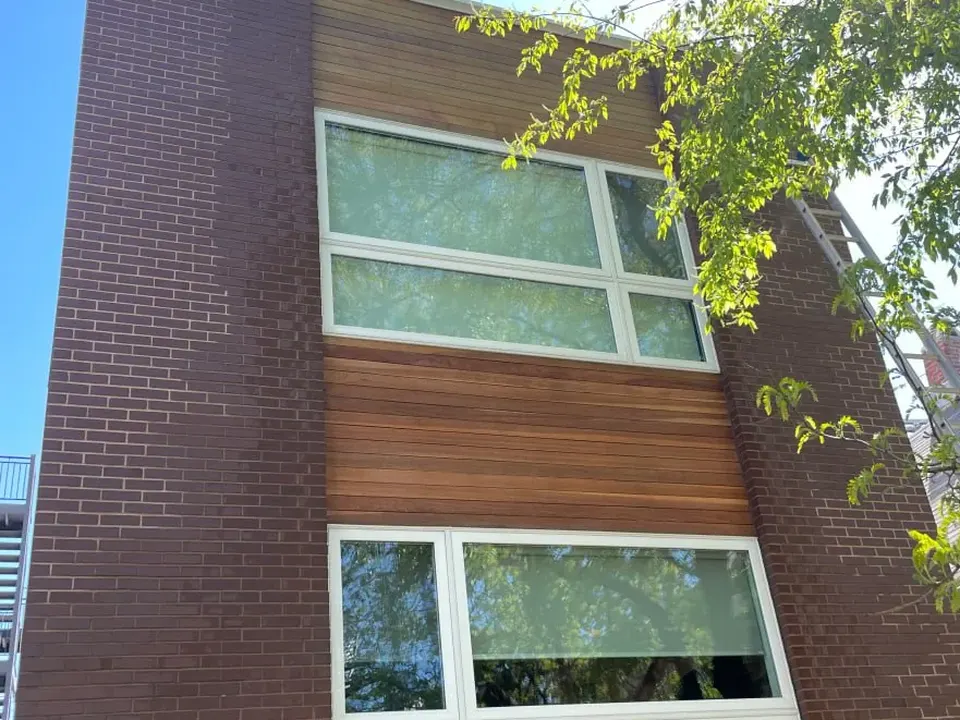
Why the North Side Is Always the Worst
Almost every call we get starts the same way. One wall looks fine and one wall looks like it belongs to a different house.
The north and east walls get the least direct sun, so they stay damp the longest after rain, dew and snowmelt.
The green film is algae. The black streaking that runs down from the gutter line is a mix of algae and the asphalt runoff coming off the roof shingles. All three respond to the same treatment, which is why one visit handles the whole wall.
When to have it done. Late spring through fall. We wash from the first stretch of consistent daytime temperatures above about 45 degrees until the freeze sets in.
How often. Most homes around Chicago need it every one to two years. A soft wash lasts because the growth is killed rather than knocked loose, which is the whole reason we do it this way.
Your Landscaping
This is the second question everyone asks, and it deserves a real answer rather than a promise that the product is natural.
The cleaning solution is diluted, but at working strength it will discolor foliage if it is left sitting on a leaf. So we do not leave it sitting on a leaf. Before any solution goes on the wall, every bed, shrub and planting along that elevation is saturated with plain water. Wet leaves cannot absorb much of anything, and the water already in and around the plant dilutes whatever drifts down.
Delicate or specimen plantings along a wall get tarped as well. If you have something along the house you are particular about, tell the crew when they arrive and they will cover it.
What we ask you to do before we arrive
- Close all windows and storm windows, and latch them
- Move patio furniture, grills and potted plants about six feet off the wall
- Take down anything hanging on the siding that you do not want wet, including flags and wind chimes
- Bring pets inside for the duration
- Point out any window or door that leaks in a hard rain, so the crew can work around it
Spider Webs, Wasp Nests and Mud Daubers
For a lot of customers this is the actual reason for the call. The algae is the thing they mention second.
Webs collect in the same places every year: under the soffits, in the eave returns, behind shutters, around exterior light fixtures, in the corners of window frames and along the underside of a deck. They are removed as part of every house wash at no extra charge, along with egg sacs and the dust and insect debris that collect with them.
Mud dauber nests are the grey tubes stuck to soffits, under eaves and in the corners of door frames. Mud daubers are solitary, not aggressive, and abandon their nests after a season. Old nests come off with the wash.
Live wasp and hornet nests must be treated and dead before we arrive. We do not remove or treat live nests. That is pest control work and it is not what our technicians are equipped or insured to do.
If you know there is an active nest on the house, have it treated first and give it a couple of days to go quiet.
If our crew finds an active nest after they arrive, they will wash the rest of the house and leave that elevation. We will come back and finish it once it has been treated. Let us know when you book so we can plan around it rather than discover it on a ladder.
What the Visit Looks Like
Walk the house
The crew walks the full perimeter with you or on their own, notes the growth, checks the paint and caulking, finds the spigot, and flags anything that needs to be handled differently.
Protect and pre-wet
Beds and plantings along the working elevation get saturated. Anything delicate gets tarped. Windows get checked to make sure they are closed.
Apply, dwell, rinse
Solution goes on bottom to top at low pressure so it does not streak, and is left to work. Rinsed top to bottom at low pressure.
Walk it again, done in a few hours
The crew walks the house a second time looking for anything that did not release. A typical two-story, all four sides, runs two to four hours with a two-person crew. You do not need to be home.
Fourteen days to change your mind. If something did not come clean, or you see a spot we missed, call us within fourteen days and we come back and redo it at no charge. We come back out and fix it rather than crediting the next job.
What our guarantee covers. The 14-day re-clean applies to the house wash: growth, film and dirt that should have come off and did not. It does not cover gutter oxidation, rust, hard water scale, oxidized or chalking siding, peeling paint, or fabric awnings that were already failing when we got there, because those are not cleaning problems and no house wash fixes them.
Questions We Get
What is the difference between soft washing and pressure washing?
Pressure washing cleans with force. Soft washing cleans with a solution and low pressure, roughly what comes out of a garden hose. Soft washing kills the organism and leaves the house alone.
Will the solution kill my plants?
Not if the work is done correctly. Every bed and shrub along the wall we are working on is saturated with plain water before any solution goes up, and rinsed again when we finish.
Does it actually kill the mold, or just wash it off?
It kills it. The solution sits on the wall long enough to kill the growth at the root. A pressure washer removes the visible layer and leaves the root structure in the surface, which is why pressure washed houses look green again within a season or two.
Is it safe for vinyl siding?
Yes, and it is the method vinyl is meant to be cleaned with. A soft wash does not generate enough pressure to do that.
What about cedar shake, stucco or EIFS?
All three are soft wash surfaces and all three are commonly damaged by companies that pressure wash them.
Do you clean awnings?
Yes, both kinds, but they are handled differently. Aluminum and metal awnings, door hoods and canopies are the same surface as your siding and are washed with the wall at no extra charge. Fabric awnings are a separate add-on, because the solution that strips algae off vinyl siding is too strong for awning fabric. It will lighten some canvas and vinyl-laminate, and over time it weakens the thread in the seams.
My awning is retractable. Anything I need to do?
Leave it extended until it is completely dry, ideally through a full sunny day. Rolling a damp awning back into the cassette creates a dark humid space for mildew, and the underside will come out spotted worse than before. If rain is in the forecast we would rather reschedule than clean it and have you retract it wet that evening.
My siding is chalky and faded. Will washing fix that?
Partly. Washing removes the film and growth sitting on top, which is often most of what looked like fading. What washing cannot fix is oxidation, which is the finish itself breaking down.
Why is there a minimum charge?
Because sending a two-person crew, a truck and the equipment to your address costs the same whether we clean one wall or four. The $195 minimum is a price on the table, the same as any other row.
Do you charge more if the house is really bad?
No. The price on the table is the price, whether the wall is lightly filmed or completely green.
Why does square footage change the price?
Because a 3,000 square foot house and a 6,000 square foot house are not the same job. Twice the wall means twice the solution, twice the rinsing and considerably more time repositioning ladders.
Do I need to be home?
No. We need access to an outside spigot and a clear path around the house.
What do I need to do before you arrive?
Close and latch all windows and storm windows, move furniture and potted plants about six feet off the wall, take down anything hanging on the siding, and keep pets inside while we work.
What if it rains?
Light rain does not affect the result once the solution has been applied and rinsed.
How often should a house be washed?
Every one to two years for most homes around Chicago.
What if I am not happy with the result?
Call us within fourteen days and we come back and redo whatever did not come clean, at no charge.
Where We Wash Houses
A house wash in Winnetka, Barrington or Lincoln Park is the same crew, the same equipment and the same published price.
Also in: Mundelein, Gurnee, South Barrington, Wheeling, Des Plaines, Niles, Hoffman Estates. If your town or neighborhood is not listed, call anyway.
City homes are different work. Narrow gangways, zero lot lines, three-flats and coach houses. Side elevations often cannot be reached with a standard ladder set, so city jobs are frequently measured on site.